KU Libraries select Sprints Week participants for research and teaching collaborations
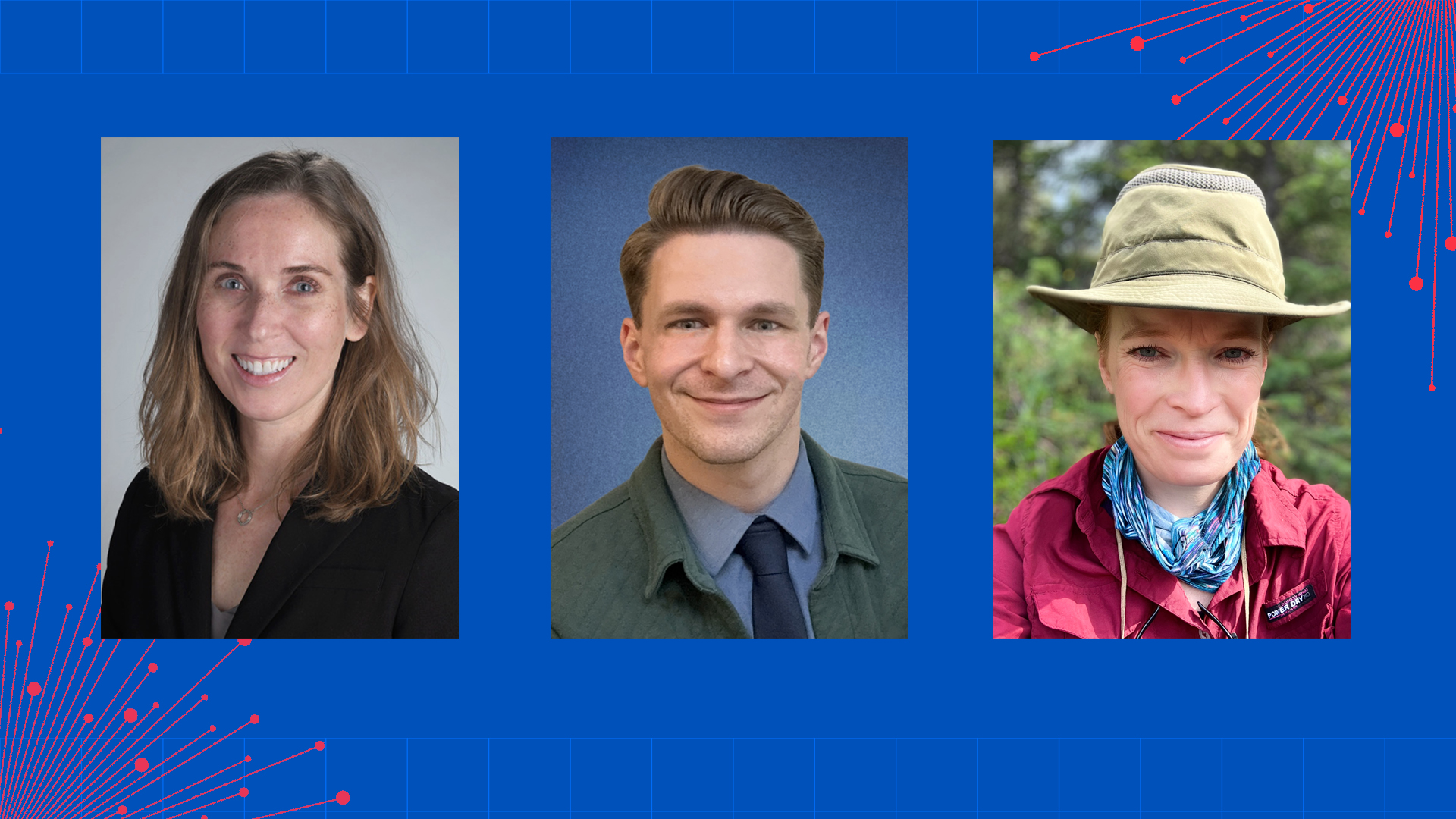
LAWRENCE — The University of Kansas Libraries have selected three faculty and academic staff members to collaborate with specialized teams of librarians during Sprints Week May 18-22, an intensive program designed to address course development and research challenges.
Each spring, faculty and academic staff from across the university submit proposals outlining projects that would benefit from focused, hands-on partnership with library experts. Selected participants are also awarded a $1,000 stipend.
The 2026 participants:
- Rachel Bechtold, lecturer in undergraduate biology.
- Jake Brillhart, lead academic adviser for Jayhawk Academic Advising and instructor in leadership studies.
- Lauren Norman, assistant professor of anthropology.
Over the course of Sprints Week, each will work closely with a dedicated KU Libraries team to advance projects ranging from transforming complex archaeological datasets to redesigning high-enrollment biology class assignments to reimagining a leadership studies course centered on campus-based learning and information literacy.
The Sprints collaborations involve approximately 35-40 hours of concentrated work, culminating in a public showcase presentation at noon May 22 in Watson Library’s Clark Instruction Center, room 340.
Michael Peper, head of KU Libraries’ Center for Faculty & Staff Initiatives and Engagement, said this year’s Sprints cohort, including projects from STEM, social sciences and interdisciplinary studies, welcomes some new academic units that have never participated before. The mix of two teaching projects and one research project also reflects the many ways librarians support KU’s mission across the university.
Though the Sprints process focuses on one intensive week, work has already begun.
“About one month prior to the Sprints, all teams convene for a planning meeting to meet each other, set the agenda and identify priorities for Sprint Week, as well as individual work to be completed in the month before the intensive period,” Peper said. “It’s always exciting to see teams meet, form strong relationships and make a surprising amount of progress, often with unexpected outcomes.”
Rachel Bechtold
Bechtold is seeking high-quality open access resources to enhance learning and engagement in BIOL 100, a high-enrollment general biology course she teaches most semesters. By redesigning class materials and activities through open educational resources, Bechtold seeks to “create a classroom that can progress in critical thinking.”
“When I began teaching at KU, I found that the Biology 100 course was already thoughtfully designed,” Bechtold said. “However, in an era of AI and information overload, I wanted to help students move beyond individual facts and see how biological concepts connect to broader, unifying themes.”
Jake Brillhart
Brillhart has partnered with the KU Institute for Leadership Studies to create LDST 292: Leading with the Law, a class that encourages students to explore their rights and responsibilities. Students learn more about the social systems that have shaped KU and continue to shape their university experience today. The Sprints project will focus on course design and increasing students’ overall self-efficacy, including information literacy and critical thinking skills.
“We want students to dive into these topics more and investigate issues they care about,” Brillhart said. “KU Libraries have the resources to help students do this, and we want to help student-leaders connect with the campus information experts, our librarians."
Lauren Norman
Norman is participating in Sprints with the members of her KU-based research team, including undergraduates, postbaccalaureates, staff, research assistants and postdoctoral researcher Caroline Kisielinski. Their project centers on large and diverse datasets that combine both recent and historical data from the Bluefish Caves in the northern Yukon of Canada, a scientifically and culturally important site that plays a key role in understanding early human presence and past environments in the region. Sprints Week work will seek ways to connect vastly diverse data types and associated notes — which are handwritten, often in French — to aid in integration, storytelling and communication.
“We decided to apply for Sprints as it will bring our whole team here at KU together for an intensive research time, and even more important, get support from experts on framing data curation and dissemination,” Norman said.
Sprints Showcase
The May 22 Sprints Week showcase will highlight each team’s experience during the week and share outcomes from each project. The showcase event is free and open to the public.