KU Libraries Sprints Week produces research, teaching results
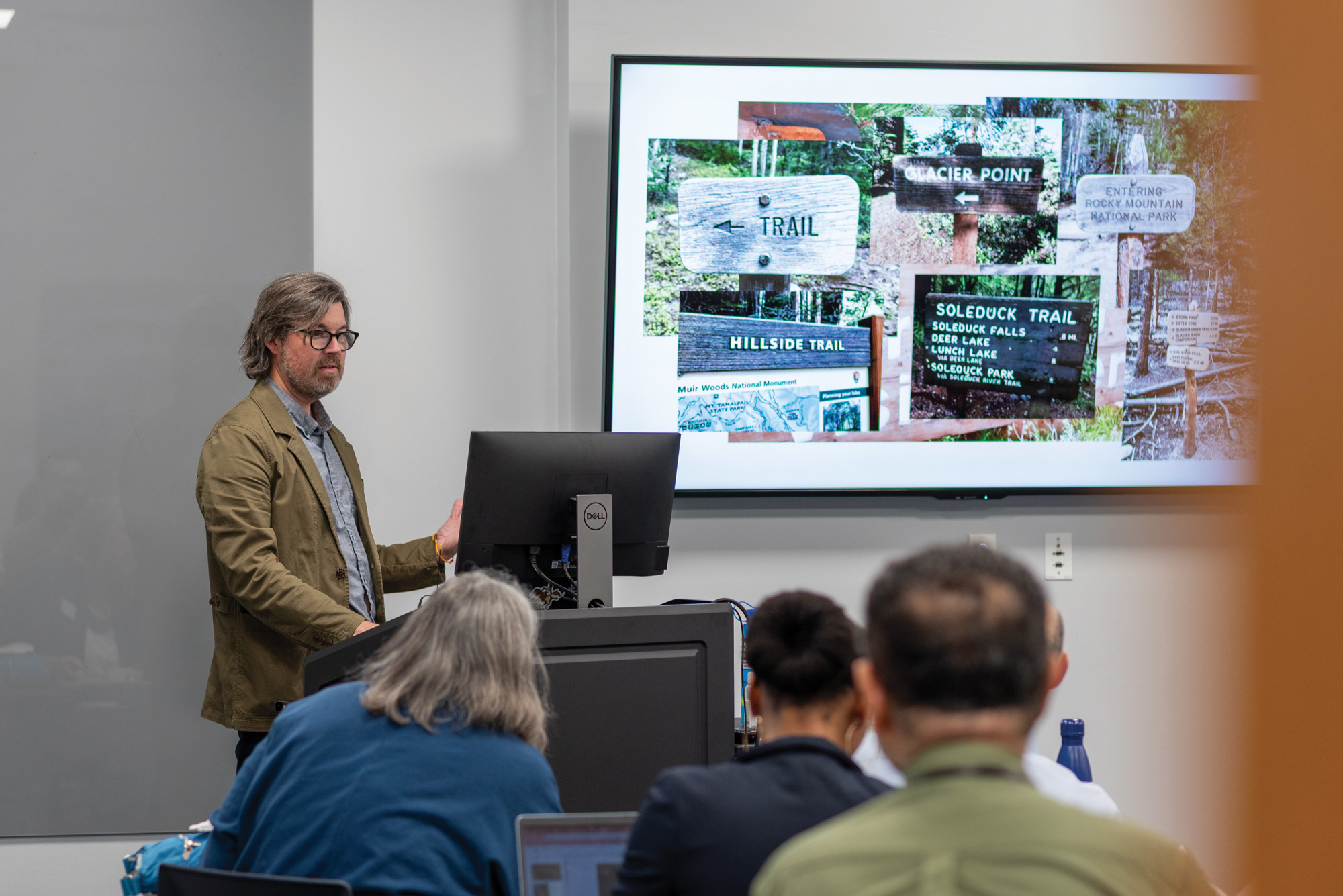
In Colorado, at an elevation of more than 11,000 feet, there's a park sign that spends more than half of the year covered in snow, but it's one of Jeremy Shellhorn's favorite design projects. Thanks to a new collaboration, the digital “Parks Signs Archive,” completed during KU Libraries' annual Sprints Week, you won't need a pair of hiking boots or a walking stick to view it.
For five intensive days, Shellhorn, a professor of visual communication design, collaborated with KU librarians to build and launch the archive as a resource and inspiration hub for parks staff, who often do not have formal design training, yet are tasked with producing effective signage on important topics.
Each year, KU faculty and instructors have the opportunity to turn their own research or teaching project into reality during Sprints Week, with applications for the 2026 cohort open now through March 2. Accepted applicants will be notified by the end of March with Sprints Week taking place during summer intersession – this year slated for May 18-22. Selected faculty receive a $1,000 stipend and dedicated time with expert library teams, tailored to their project.
This year the Sprints program celebrates its 10th anniversary. Beginning in the spring of 2016, KU Libraries piloted “Research Sprints: One Week, One Project,” a program aimed at cultivating relationships with faculty through deep, project-based engagement. Though the program has evolved over the past nine years, the core purpose has remained, with 19 faculty partners from 17 different academic units. Learn more at lib.ku.edu/sprints or email sprints@ku.edu.
A Model for Intensive Collaboration
KU Libraries regularly partner with faculty and staff on research, teaching and scholarly communication topics, but for one intensive week at the end of the spring semester, teams of librarians work to complete complex tasks in a short amount of time during Sprints Week. The program pairs selected faculty and staff with specialized teams of librarians, producing tangible outcomes or products.
"Sprints projects come from a wide variety of academic disciplines and provide a unique opportunity for dedicated and focused time to work with a library team with wide and deep expertise to significantly advance challenging work," said Michael Peper, Head of the Center for Faculty & Staff Initiatives and Engagement with KU Libraries.
Librarian expertise applied to Sprints projects includes data management and visualization; mapping; foreign language expertise; information, primary source, visual and digital literacies; disciplinary expertise; open access and educational resources; and scholarly communications, among others. These reflect resources and librarian expertise available to faculty year-round.
The 2025 Sprints cohort included three faculty partners — Dorothy Hines (African & African-American Studies), Shellhorn (Architecture and Design), and Georgina White (Classics) — who worked 35-40 hours alongside more than a dozen library faculty and staff contributors on three different teams to produce tangible outcomes ranging from digital archives to curriculum redesigns.
Mapping Historical Trauma: Body Cartography in the Classroom
Hines' project focused on developing a course about the education of African Americans during slavery and post- slavery, including a body cartography project, a way of mapping reactions and processing personal responses to texts to help students think more deeply about the subject and their interactions with it.
"It was very helpful to have cross- collaboration with so many different people on my team and learn about different library and campus resources," Hines said. "The entire experience was definitely advantageous to my class, to myself, to the students. I'm very appreciative of the community that was created in a new way with people that I wouldn't necessarily have connected with outside of Sprints Week."
The Park Signs Archive: A Digital Guide for Conservation Communication
Shellhorn collaborated with KU librarians to create and launch The Parks Sign Archive (parksignsarchive.org), a community-driven digital resource documenting conservation communication in parks, public lands and protected areas. Built in fewer than five days using the open-source Omeka platform, the archive allows users to browse and upload photos of signs, interpretive panels, and kiosks. Each entry includes descriptive metadata, tags and geolocation, making the collection both searchable and useful as a practical design reference for parks staff.
Inspired by conversations with rangers and a presentation from a 2022 Sprints participant, Shellhorn envisioned a way to visually share how parks across the country address common challenges such as protecting habitats and managing visitor behavior. In the absence of direct ranger interaction, he sees signage as a vital storytelling tool, and the Sprints collaboration transformed his long-held idea into a functional, shareable archive of best practices.
"The sprint has made this dream come alive and made it possible," Shellhorn said.
Open Educational Resources for Classics
White endeavored to design a new first-year seminar to prepare students for upper-level classics courses using open educational resources, freely available and adaptable educational materials.
"The opportunity to have people who are engaged and interested and care about the student experience bringing their thoughts and expertise is fantastic," White said. "Sprints Week was so incredibly valuable. I've come out of this with a syllabus, all my assignments and all my teaching resources, which for a week is remarkable. Thank you, thank you, thank you."