Lost history recovered: KU digital humanities team adds missing pages to The Call archives
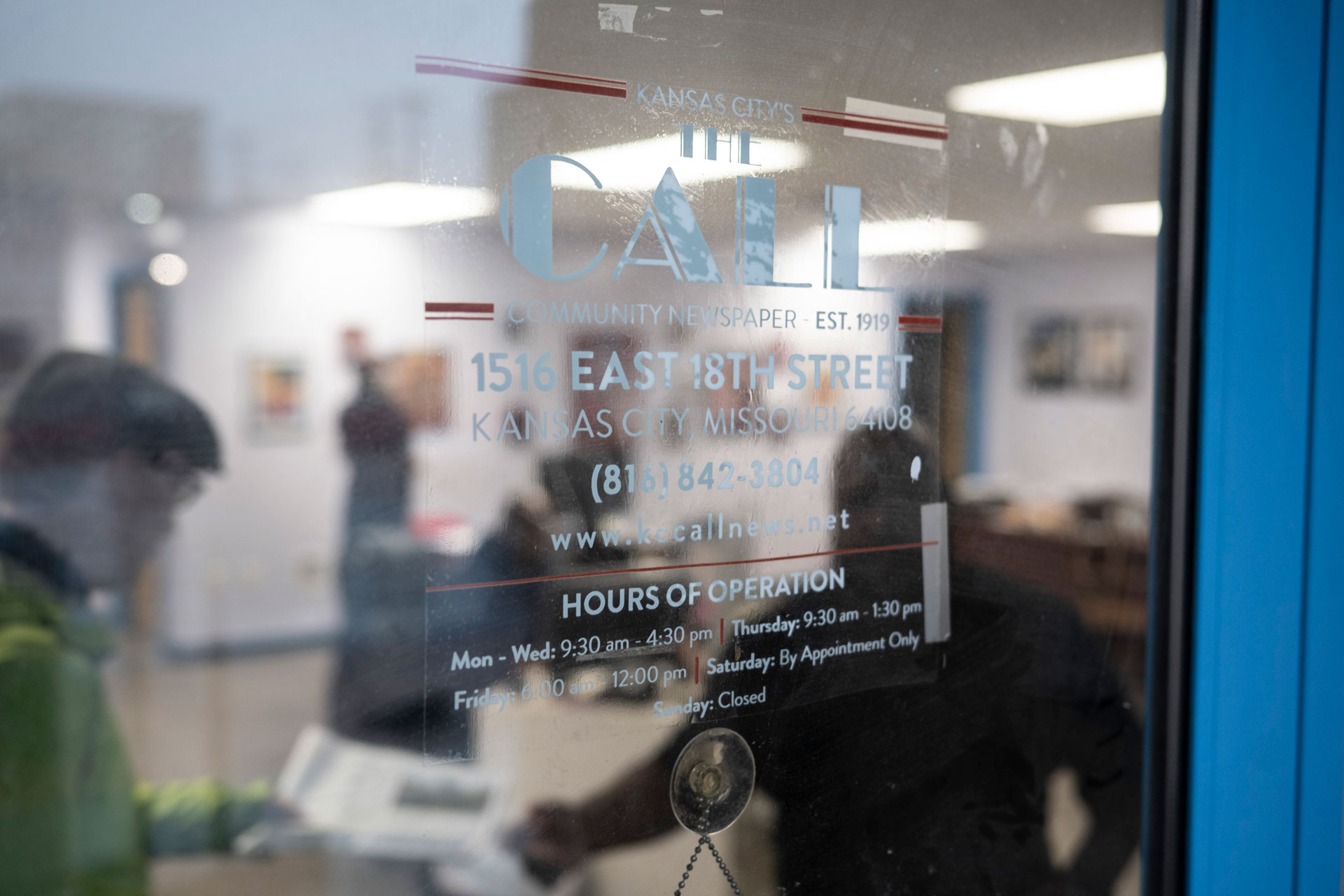
LAWRENCE — In a cardboard box tucked away in an office in the 18th and Vine District, a decade of Kansas City history was slowly turning into a collection of unreadable plastic circles. These were the archives of The Call, Kansas City’s legacy African-American newspaper founded in 1919. While much of the paper’s storied past is digitized in major databases, gaps existed with source files only on archaic CD-ROMs, in formats so old they had become “junk code” to modern computers.
That is, until Digital Humanities Librarian John McEwan and a team of three dedicated University of Kansas undergraduates from the Institute for Digital Research in the Humanities (IDRH) stepped in.
From Sunday football to civil rights
The project began as an offshoot of research by Dave Tell, professor of communication studies at KU. For two years, Tell has been working with the Monday Nite Footballers, a group of Black men in the Kansas City area who have met weekly since the first Monday Night Football broadcast in 1970 to discuss sports, politics and racial justice.
For decades, the legendary editor of The Call, Lucile Bluford, a KU alumna who was famously denied entry to the University of Missouri due to her race, published accounts of these men’s meetings.
“The Call has now published more articles by or about the Monday Nite Footballers than any other topic ever,” Tell said. “But 10 years of their story were buried on unreadable CD-ROMs. We had no idea what was there.”

The “gauntlet” of data recovery
Earlier this semester, McEwan drove to The Call office near 18th and Vine in Kansas City and loaded 460 discs into a trunk and brought them back to Lawrence. What followed was a technical “gauntlet.”
“John went through all the gauntlets to get the discs,” said Zander Semrau, of Olathe, one of the student researchers. “We took the discs and put them through a device that uploaded them to an old computer … the main problem now is opening them in a format that we can actually look at as a newspaper versus as just a jumble of code and incoherent symbols.”
The files on the CDs provide access to the original files and photographs of the newspaper, including the advertisements, the classifieds and the obituaries — a full sense of the entire paper. The team isn’t just trying to see the images; the scholars are making the text machine-readable. This allows researchers like Tell to run algorithms and queries such as tracking exactly when a specific member joined the Monday Nite Footballers by searching for their signature across thousands of articles.
Why digital humanities matters
For the students involved, the project is more than just a technical challenge; it’s a way to bridge the gap between 18th-century storytelling and 21st-century technology.
“This is real data, real research, that’s going to have a real impact on communities in the local area,” said Kazeo Abdulqader, a student from Lawrence.
“I think this is really helpful to understand how certain people, specifically in Renaissance studies or medieval studies, can use these digital tools to help us better understand the past,” said Isabella Mautino, a student from Lee's Summit, Missouri.
Join the conversation
The IDRH team will host a special event to showcase its findings and demonstrate the tools built to visualize this recovered history.
What: Data Recovery and the Kansas City Call Presentation
When: Noon-1 p.m. May 1
Where: Watson Library, Clark Instruction Center
Format: A talk with slides, a demonstration of the digital tools and a Q&A session.
As Tell puts it, the project is a testament to the university’s role in serving the public.
“It feels important that we honor the fact that it was their initiative,” he said. “They came to us with the hope that we could help them tell their story.”
Access the current KC Call archive at Kansas City Call via KU Libraries.